regulation and compliance
The DTC Compliance File Every Winery Shipper Must Keep
Federal permit, state direct shipper licenses, label registrations, volume caps, and tax returns. A plain walkthrough of the paperwork a winery must hold before a club box crosses a state line.


The three tier system and the direct shipping exception carved out by Granholm
The United States wine market is shaped by the three tier system, a post-Prohibition structure that puts a licensed distributor between a producer and the retail customer. For most of the twentieth century, wineries could not legally ship wine directly to consumers in other states unless the wine passed through a distributor and a retailer. This made it nearly impossible for a small winery to reach out-of-state wine club members on its own.
That changed in 2005, when the Supreme Court decided Granholm v. Heald. The ruling found that states could not allow their own wineries to ship direct to consumers while blocking out-of-state wineries from doing the same. This forced many states to open the door to direct-to-consumer (DTC) wine shipping, if only for those willing to navigate a new patchwork of permits, reporting, and compliance obligations.
Today, wineries can reach club members in most states, but only if they follow each state's rules to the letter. The result is a regulatory mosaic, where federal, state, and even local requirements all must be satisfied before a shipment can legally cross a border.
Keep reading: The Checklist to Work Through Before You Bill a Club Run
Federal first: the TTB basic permit and your COLA approvals
Every bonded winery in the United States operates under a federal permit from the Alcohol and Tobacco Tax and Trade Bureau (TTB). This Basic Permit is the foundation for all legal production and sales. It also lays out recordkeeping and reporting expectations that apply whether a bottle is sold at the tasting room or shipped to a club member in another state.
Wineries making their own wine must also secure a Certificate of Label Approval, or COLA, for each brand, varietal, and vintage they intend to sell across state lines. The COLA shows that each label follows federal standards for required information, prohibited statements, and the use of terms like "estate bottled" or "reserve."
There are exceptions: if you only sell on your premises, or if your wine qualifies as a cider under federal rules, you may be able to skip the COLA. However, virtually any DTC shipment into another state will trigger the COLA requirement. Keep copies of all issued COLAs, as state officials sometimes ask to see them during audits or permit applications.
Direct shipper permits: applications, bonds, fees, and renewal calendars
Once the federal paperwork is squared away, wineries must obtain a direct shipper permit from each state where they plan to send wine. These permits are not one-size-fits-all. Application forms vary widely, and each state has its own list of required attachments.
Common application materials
- A copy of your TTB Basic Permit
- COPIES of COLAs for wines you will ship
- A certificate of good standing from your home state
- Proof of sales tax registration
- A bond or surety in some states, often with a minimum dollar amount
The application fee can range from a nominal processing charge to several hundred dollars. Many states require annual renewal, often with a separate fee and an updated certificate of good standing. Some states, such as Virginia and New York, require a bond that must be maintained and periodically refiled. Miss a renewal deadline, and you may need to reapply from scratch or pay a late penalty.
Expect several weeks for initial approval, especially in the spring when permit offices are busiest. Once granted, the permit number must often be listed on shipping labels and invoices. Keep a calendar of renewal dates and set reminders well in advance, states rarely send notices, and a lapsed permit can mean lost sales and regulatory headaches.
Keep reading: What a Three-Bottle Club Shipment Costs to Pack and Ship
Brand and label registration in the states that require it
Some states go beyond basic permitting and require wineries to register each brand or label before any wine can ship to a resident. This typically applies in markets such as Texas, Illinois, and Louisiana. Registration is separate from COLA approval, and the requirements are not always clear from the outset.
Label registration often involves submitting a sample label, a copy of the federal COLA, and sometimes a list of distributors, even for DTC shipments. Approval times can range from days to months, depending on the state's backlog. In some states, you cannot begin shipping a new vintage or SKU until the latest label registration clears.
Failure to register a brand can result in fines or, in rare cases, a shipment embargo. Track every vintage and bottling you plan to sell and confirm which require new registrations. Some states expect a fresh registration with each vintage, while others only require it the first time a label is shipped.
Per consumer volume caps and how a state counts them
Nearly every state that allows DTC wine shipping sets a cap on how much wine one consumer can receive from a single winery. These caps are enforced on a monthly or annual basis. Typical limits are one to three cases per consumer per year, but there is wide variation.
Counting mechanisms
States count volume in different ways. Some measure by bottle, others by case, and a few by gallons or liters. Most states require that all shipments be reported with recipient details such as name, address, and volume sent. In many states, these reports are then cross-checked against other wineries to prevent a consumer from exceeding the per-winery limit through multiple suppliers.
Some states require you to block further shipments to a customer when they reach the cap, even if the customer wants to pay for expedited shipping or a second club allocation. In rare cases, enforcement is handled through audits of your shipping and sales records. It is critical to have a reliable system to track shipments by recipient, by state, and by calendar period, so that you do not unintentionally violate a cap.
Be aware that club members who move between states may have different limits in each location. Whenever a customer updates their shipping address, you must check the new state's volume cap and rules before sending their next wine club box.
See how CellarShip handles this for wineries
Sales tax, excise tax, and the zero report that still has to be filed
DTC shipments typically trigger two kinds of taxes: sales or use tax, and state wine excise tax. Nearly all states that permit direct shipping require the winery to register for sales tax, collect from the customer, and remit according to the state's filing schedule. Some states also require local sales taxes, which vary by city or county.
Excise tax requirements
Excise taxes are calculated based on volume shipped, not the sale price. The rate per gallon or liter varies from state to state, and some states use separate rates for sparkling, still, or fortified wine. Expect to file excise tax returns monthly, quarterly, or annually, even if you made no shipments during the period. These "zero reports" are mandatory; missing one can trigger a penalty or even suspension of your shipping permit.
Some states require a separate registration for excise tax collection, apart from your standard sales tax permit. Report forms often ask for detailed information, such as the name and address of each recipient, delivery date, and bottle volume. It is best to keep all shipping records and sales reports organized to make tax filings easier, especially during busy club release periods.
Adult signature, approved carriers, and prohibited delivery areas
Federal law and state regulations require that every DTC wine shipment be delivered only to an adult who can show proof of age. This means using a carrier that offers adult signature service and instructing club members that someone 21 or older must be present to receive the package.
Most states allow common carriers such as FedEx and UPS, but a few restrict which carriers can be used, or require pre-approval of your shipping account. Some states, such as Alabama and Utah, do not permit any DTC shipping to consumers. Others have "dry" counties or cities where alcohol shipments are always prohibited, even if the state issues a shipping permit. Shipping into a restricted area may result in fines or a permanent ban from the state's direct shipper program.
Make sure your shipping software or order processing workflow checks every address for eligibility before you print a label. If a package is returned due to failed delivery or an underage recipient, keep the records to show the attempted compliance. States may check these logs during an audit or permit renewal.
Keeping records a state auditor can actually follow
The last piece of the compliance puzzle is solid recordkeeping. States expect wineries to keep copies of every permit, tax return, label registration, shipping manifest, and sales invoice for multiple years, often three to five. These records must show exactly what was shipped, to whom, when, and by which carrier.
A typical audit will start with your direct shipper permit and drill down to shipment logs, customer lists, and payment records. Auditors look for gaps in reporting, shipments over volume caps, sales with no corresponding tax return, or club boxes delivered into restricted areas. Any inconsistency or missing record can trigger a deeper investigation or even a fine.
Many wineries struggle with fragmented paperwork: permits kept in a file drawer, sales tax returns on a computer, club shipment records in a POS system. To avoid compliance headaches, centralize your compliance documents and reporting tools. If you use a third-party fulfillment house, insist on regular reports and keep copies in your own files. Digital recordkeeping can help, but only if the system is set up to handle varying state requirements and audits.
Today's compliance environment demands more than a single spreadsheet. Many wineries now use software built specifically for DTC compliance, offering shipment allocation, hold management, and per-state checks in one place. These tools make it easier to prove, when asked, that every club box shipped was legal from permit to delivery.
Read also

The Checklist to Work Through Before You Bill a Club Run
The order of operations for a clean club run: lock the wine, check compliance by state, update cards, validate addresses, honor holds, then bill. Work it from the top every single cycle.
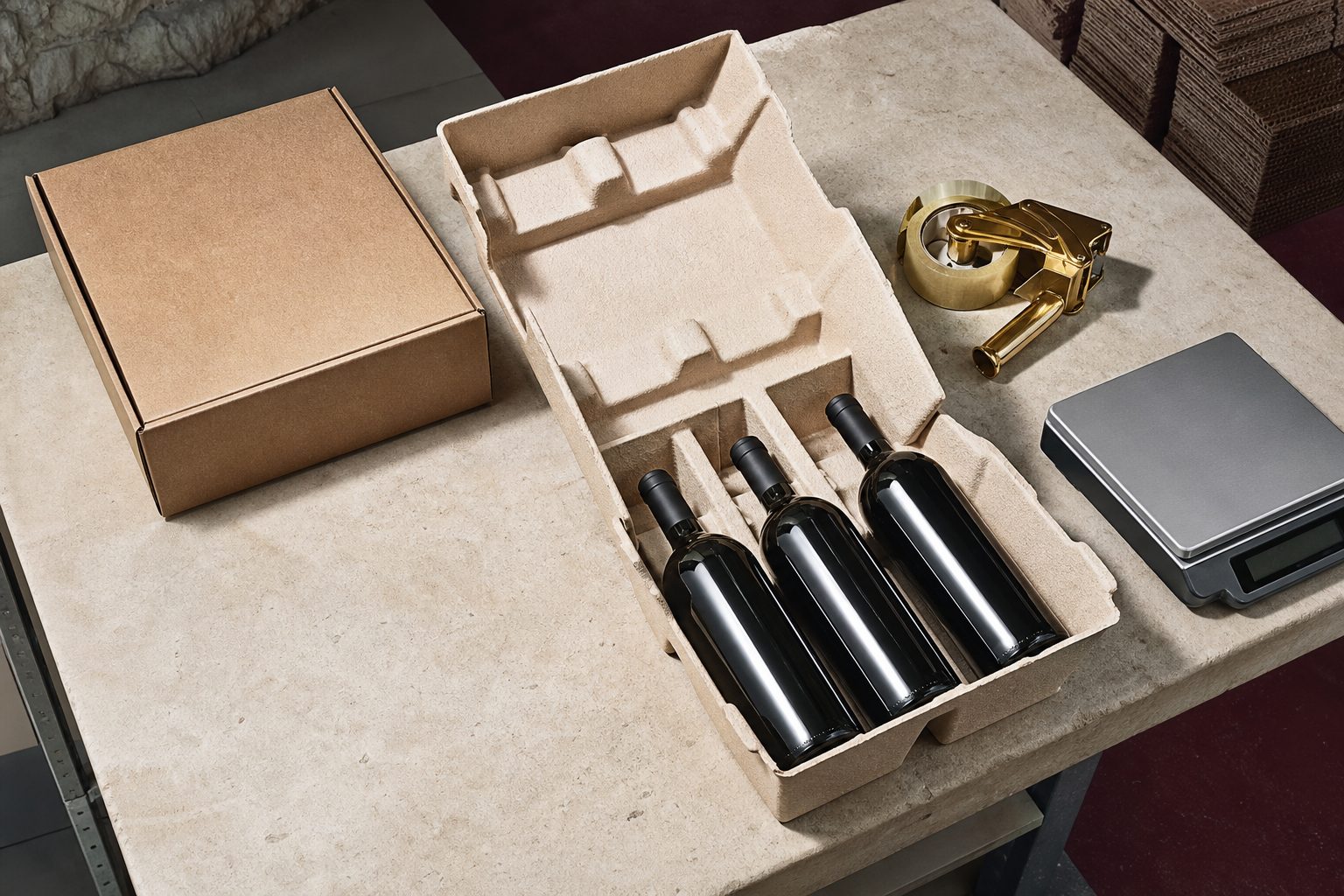
What a Three-Bottle Club Shipment Costs to Pack and Ship
Shipper, insert, freight zone, residential surcharge, adult signature, pick and pack, card fees, and reships. How to build a cost per box figure you can actually defend to a partner.

The Club Shipment Errors That Cost You Members and Wine
Most club failures are process failures: billing before the change window closes, shipping into a heat wave, mishandling a skip, and packing a wine the destination state has never seen.