Wine club operations

Every club release, from allocation to the shipping label, without a spreadsheet

CellarShip keeps your member list, your allocation, your hold and skip requests and your state rules on one board, so release week stops being a workbook with nine tabs and a color code only you understand. Pick, pack, and hand the driver a clean manifest the same afternoon.

  • 212 US wineries run their club here
  • Shipping rules maintained for 47 states
  • Running inside one release cycle
A tasting room manager packing wine bottles into a shipping case in a stone cellar with oak barrels behind
1,184 cases cleared, labeled and manifested in one spring release at a 900 member club.

Release week, as it actually goes

The workbook wins every spring, and the winery pays for it

Nobody sets out to run a wine club from a shared file. It happens because the first release had forty members and a single tier, and then it had six hundred members, two tiers, a pickup list and nineteen shipping states.

The hold list lives in your inbox

Members reply to the release email asking to skip this one, to hold until October, to add two magnums, or to swap the card on file. Those replies get typed into a workbook by hand on the morning of the pick, by whoever is free.

What it costsAbout $2,900 a release in reshipped and refused cases


Cards fail after the run, not before

The declines show up when the bank file lands, three days after the pack line closed. By then the case is taped, the label is on it, and someone has to cut it open and put the bottles back on the rack.

What it costsAround 11 percent of club cards decline on the first pass

State rules sit in one person's memory

Volume caps, permit renewal dates and the states that take no direct shipment at all live on a printed sheet taped inside the office door. When that person is at a trade tasting, the case ships anyway.

What it costsA refused case plus a $148 carrier return, every single time

Pickup members get shipped by mistake

The pickup list and the ship list drift apart between the last club event and the release. Cases go out to people who were planning to drive over, and the tasting room spends the following week apologizing on the phone.

What it costs31 tasting room hours a release spent on corrections

How a release runs

Four moves from allocation to the carrier

The same order every time, whether you are shipping 180 cases or 1,800. Each step closes before the next one opens, so nothing gets picked from a sheet that changed an hour ago.

  1. Build the allocation

    Set the tier rules once: three bottles for Cellar Circle, six for Founders, a double allocation for anyone past ten years. CellarShip rebuilds the list every release and flags the members whose tier or address changed since the last one.

    Under an hour for most clubs
  2. Open the member window

    Members get one link to hold, skip, change quantities, move to pickup or update a card, with a cutoff date you choose. Every answer writes straight onto the release board instead of piling up in a mailbox.

    Members answer on their own time
  3. Clear the state checks

    Every address runs against volume caps, permit status and the states that accept no direct wine shipment. Anything that fails is held back with the reason written in a sentence you can read out loud to the member.

    47 shipping states maintained
  4. Print, pack, hand off

    Pick lists print in pack order, labels print with adult signature already set, and the manifest goes to the carrier as a single file. The truck leaves with paperwork that matches the cases on the dock.

    Same day handoff
Oak wine barrels stacked in a stone cellar with a few bottles resting on a wooden table
Three days is the median gap between the hold window closing and the carrier pickup for clubs on CellarShip.

What the release desk covers

Six pieces of the club, kept in one ledger

Written for wineries that pack their own cases, answer their own club phone and know exactly which member always asks for the Petite Sirah instead.

Allocation builder

Tier rules are set once and applied to every release: three bottles at Cellar Circle, six at Founders, a doubled allocation for members past their tenth year. Substitutions and library adds sit on the same screen instead of a side note.

Hold and skip window

Members hold a shipment, skip a release or switch to pickup from a single link, with a cutoff date you set from the release screen. Every change writes onto the pick list right away, so the pack line never works from a sheet that expired last night.

Per state compliance checks

Each address is checked against volume limits, permit status and the states that refuse direct wine shipments outright. Blocked orders wait in a queue with the reason and the fix attached, rather than failing quietly at the carrier counter.

Carrier labels with adult signature

Labels print in pack order with adult signature required and the service level matched to the forecast for that route. A weather hold moves an entire batch to the following Monday without rebuilding the run.

Card retries before the pack

Declines are worked three business days ahead of the run, and members get a self service link to replace the card themselves. You walk onto the pack floor already knowing which cases are paid for.

Release ledger for the counter

Every member record shows the last four releases: what shipped, what was held, what was refunded and who called about it. The person at the tasting bar answers the question without walking back to the office computer.

What changes by the second release

Numbers our wineries report after two cycles

Averages taken from 74 clubs that shipped at least two releases on CellarShip during 2025, measured against the release they ran the year before.

9.5 hrs

Given back on release week

The hold list, the skip list and the pickup switches all land on one board, so nobody rebuilds the workbook by hand the night before the pick.

82%

Fewer declines at the pack line

Cards are retried three business days before the run and members can replace their own card, so failures are settled before a case is taped shut.

$2,900

Off the reship line, per release

Addresses that fail a state check never reach the carrier, and pickup members stop receiving cases they were planning to collect in person.

1 day

From last pick to carrier pickup

Pick lists, labels and the manifest print from the same release record, so the driver takes paperwork that already matches the pallet.

From the cellar door

Three operators on their first year

Small production wineries in three regions, each running a club between 400 and 1,600 members.

Our spring release used to take two of us three full days, mostly reading email and typing holds into a workbook. This April I built the allocation on Monday, the hold window closed Thursday, and we handed 640 cases to the driver on Friday with nothing to redo. What surprised me was how quiet the phone got.

Marisol Vega Tasting Room Manager, Ridgeline Bench Cellars, Paso Robles, California

We ship to nineteen states and I was the only person who knew which ones were trouble. In one release CellarShip caught eleven addresses that would have gone out and come straight back, and it told me why in a sentence I could read to the member. That alone covered the year.

Dana Kirchner Owner, Two Ferry Vineyards, Traverse City, Michigan

The card retry window is the piece I would fight to keep. We used to cut open taped cases because a decline landed after the pack was finished, and now every decline is settled before anyone touches a bottle. First pass approval went from the high eighties to ninety seven percent.

Ellis Thorne Direct to Consumer Director, Slate Hollow Winery, Walla Walla, Washington
212 US wineries running club releases on CellarShip
486,000 Club bottles allocated through the platform during 2025
97.4% Club shipments that clear state checks on the first pass

Plans

Priced by the size of your club, not by the case

No per shipment fee, no percentage of the release, no charge for the fourth person you want looking at the board.

Small Club

Up to 350 members

$59 per month

For a single label running two or three releases a year with one pack day each.

  • Up to 350 club members
  • Two club tiers with allocation rules
  • Hold, skip and pickup window
  • State checks for every state you hold a permit in
  • Pick lists and carrier labels in pack order
  • Email support, answered within one business day
Request a demo

Multi Label

Up to 6,000 members

$289 per month

For estates shipping two or more labels, or a second bonded entity, out of the same building.

  • Up to 6,000 club members
  • Multiple labels and bonded entities under one login
  • Custom allocation logic for library and large format
  • Shipment export shaped for your filing service
  • Two onboarding sessions a year, before your busy releases
  • A named contact who knows your release calendar
Request a quote

Every plan is billed monthly in US dollars, with no setup fee and no annual contract. Cancel at any time from the account screen and keep exporting your club data for thirty days afterward.

Questions we get on the first call

Straight answers before you book anything

If your question is not here, write to us and you will get a person, not a form letter.

Three plans, all billed monthly in US dollars: Small Club at $59 per month, Estate at $139 per month and Multi Label at $289 per month. The plan you need is decided by member count and by how many labels you ship under, not by how many releases you run. Moving up a plan takes effect on the next invoice and the change is never backdated against you. There is no setup fee and no annual contract to sign.

Most wineries run their first release with us within two weeks of sending a member export. Day one is the import: members, tiers, addresses, payment tokens and pickup preferences. Day two is your allocation logic, which usually takes a working session of about ninety minutes. We ask that you run one full release with us watching before you retire the old workbook.

Member records sit on US hosted infrastructure and are visible only to the staff accounts you create. We do not sell, rent or share your club list, and we never market anything to your members. Card details stay with your payment processor as tokens, so full card numbers are never stored in CellarShip. You can export the entire club to CSV whenever you want, without asking us first.

CellarShip exports a release summary that maps to the accounts your bookkeeper already uses, and it imports member lists from the common winery point of sale formats. Labels are produced for the parcel carriers that handle wine, using your own account numbers and your negotiated rates. If your till is something local or homegrown, the CSV import covers it and we map the columns with you during onboarding. We do not try to replace the register in the tasting room.

You can cancel from the account screen at any time and the plan stops at the end of the month you have already paid for. Your records stay available for export for thirty days after that, as CSV and as a full archive file. There is no cancellation fee and nobody will ask you to sit through a retention call. If you come back for the next vintage, that archive restores in one step.

No, and we would rather say so plainly. CellarShip checks every shipment against volume caps, permit status and the states that do not accept direct wine shipments, then holds back the ones that fail before they reach a carrier. Filing your returns and renewing your permits stays with you or with the compliance firm you already pay, and we export the shipment data those filings need. Wineries who work with a filing partner keep that partner, and the export drops into their process without retyping.

Cellar & Club

The CellarShip magazine on club shipping

Nine reports on the part of the winery year that nobody photographs: the permit file, the billing run, the pack line, and the box that came back. Written from release weeks spent in tasting rooms across six states.

Winery office desk with stacked permit folders, a wax sealed portfolio, and a wine bottle in warm afternoon light

regulation and compliance

The DTC Compliance File Every Winery Shipper Must Keep

Federal permit, state direct shipper licenses, label registrations, volume caps, and tax returns. A plain walkthrough of the paperwork a winery must hold before a club box crosses a state line.

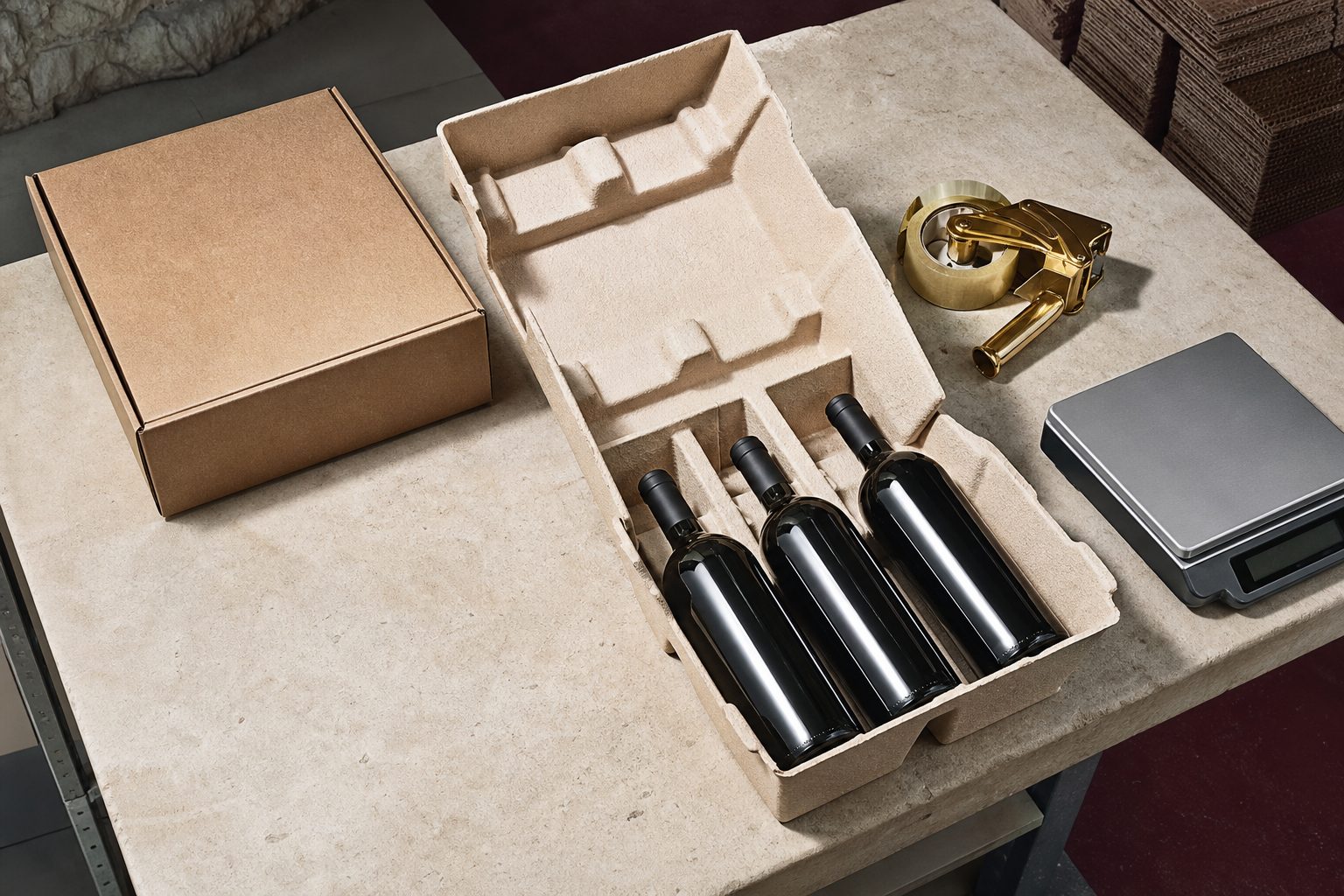
Open three bottle molded pulp wine shipper on a worktable with an outer carton, tape gun, and shipping scale

numbers and benchmarks

What a Three-Bottle Club Shipment Costs to Pack and Ship

Shipper, insert, freight zone, residential surcharge, adult signature, pick and pack, card fees, and reships. How to build a cost per box figure you can actually defend to a partner.

Read every report in Cellar & Club

Talk to us about your next release

Send us the shape of your club

Tell us the member count, the tiers and the states you ship to, and we will walk you through the release board with your own numbers loaded, not a made up estate with tidy data. Thirty minutes, screen shared, no slides.

  • We reply within one business day, and it is a person who has packed a release.
  • Bring your member export and we will show you the import live on the call.
  • If your release is three weeks out, say so and we will work to that date.
One business day reply

Nothing here goes to a mailing list, and there is no sequence of follow up emails waiting for you. Prefer plain email? Write to jimenezjulien42@gmail.com and mention your release date.

About the author